
Brasilidade Empresarial · Intervista
Rafael Brunialti: The Brazilian shaping a people-centric compensation and benefits strategy at Ahlstrom, a global leader in fiber-based materials
Pubblicata il 13 febbraio 2025. Intervista condotta da Fabiana Di Pietro.
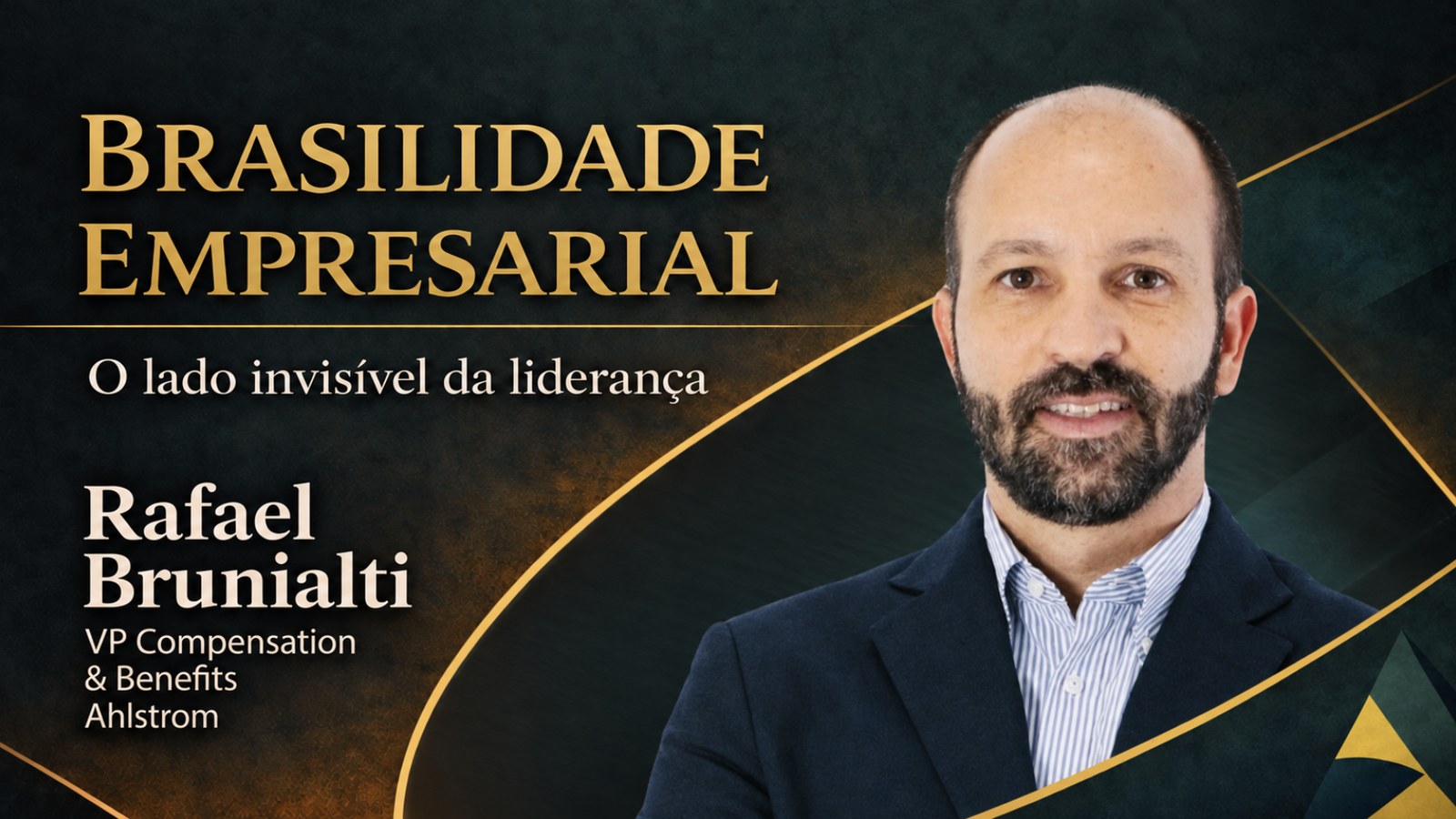
He holds one of the most strategic positions in the HR area at Ahlstrom, a Finnish multinational and a global leader in fiber-based specialty materials, with approximately 7,000 employees worldwide.
Rafael Brunialti is Brazilian and currently serves as the Vice President of Compensation and Benefits at the company. He leads and designs global compensation policies and benefits practices, aligning them with the business strategy and fostering a corporate culture that places people at the center of organizational success.
What motivated your decision to seek experiences outside of Brazil?
I grew up in Campinas, a city in the countryside of São Paulo, and I always dreamed of exploring the world and experiencing new cultures. My mother played a significant role in fostering this desire, encouraging me to seek experiences beyond my comfort zone, as did my father, the grandson of immigrants. In my second year of college, I had already decided that I wanted to go on an exchange program, but my father advised me to finish my degree, save my own money, and then pursue my dreams. At the time, I was frustrated and didn’t really understand why he didn’t support me like other fathers supported my colleagues, but later, I realized it was one of the best pieces of advice I had ever received.
A few years later, after graduating in Economics and working at Deloitte, I used my savings to go to Germany. My sister and brother-in-law, who were living close to the city I was going, were also essential in supporting this experience. This was my first real international experience, and it was a turning point in my life.
How did this impact your trajectory and, perhaps, your worldview?
When I left Brazil in 2008, I realized you reset your identity. You lose the network of contacts you've built throughout your life. No one knows who you are, where you studied, you don’t know which doctor to go to, and you don’t have anyone to call in an emergency. This forces you to find solutions and navigate challenges in a completely new cultural context.
On the other hand, the fact that no one knows your past, achievements, or social status gave me a sense of freedom and the opportunity to be evaluated solely based on my actions. A good example of this was when I decided to stay in Europe. I moved to Ireland to improve my English and worked as a kitchen assistant to save money and travel across the continent. That experience taught me humility, adaptability, and the value of starting over. This "reset" not only prepared me for the global job market but also reinforced the importance of building new stories and connections. It also helped me develop problem-solving skills in entirely new ways.
You graduated in Economics and started at Deloitte as an auditor, then moved into financial planning at DHL. How did you transition into the HR field?
It was an interesting transition. During a performance review, my boss at that time—who is also a mentor and someone I greatly admire—told me that I needed to align my professional vision with my personal strengths. He recommended me for a position in Compensation & Benefits at DHL, and I started studying the field. I realized I could merge my technical background with my strongest skill: human relationships, which have always come naturally to me. My first manager in the Compensation area was essential to my success in the field. I worked on projects in Brazil, Argentina, and Chile, culminating in a project in Germany that became a global pilot, implemented across the entire company, and earned significant recognition.
Speaking of human aspects, what values and characteristics do you believe contributed to your journey?
First, ethics in the workplace and respect for people. Second, the ability to stay committed to my dream despite the challenges of living abroad. Building relationships based on trust, empathy, open communication, and ethical conduct has been a key differentiator for me—especially in a global leadership role, where cultural differences significantly impact the way we work. Being an expatriate and adapting to different cultures has strengthened this ability. I would say resilience, creativity, and the ability to form authentic connections have definitelly been powerful assets—what you call "Brasilidade Empresarial“ in our group, which I think is highly valuable abroad.
You mentioned that your international experience, particularly in Germany, was crucial for adapting to new environments. What was the main lesson from that period that influenced your career and could help others in similar situations?
I believe the most important lesson was resilience, flexibility, and the importance of family support during challenging moments (especially from my wife in that case). When you're in a new environment as an expat, you need to learn how to deal with cultural differences, the challenges of living abroad, and the personal and professional difficulties that come with it. Germany was a place of growth for me because it challenged me and taught me the importance of adaptability, staying positive, and finding creative solutions to problems. I think this spirit of resilience and flexibility is something everyone can apply to their careers, regardless of their field. The support of mentors and people who believed in me was essential. Do you know when there are days when it feels like a project won’t work out? I’ve noticed that we, as Brazilians, have a unique ability to refuse to accept "it can't be done."
With the rapid advancement of AI, automation, and data analytics, how do you see the future of work evolving? What role will human connections play in this increasingly digital landscape?
I believe the future of work will be even more people-centered, despite the increasingly digital environment. Technologies such as AI, automation, and data analytics will streamline processes and drastically reduce the time needed to reach certain conclusions, but the real challenge will be balancing these tools with the need for deeper human connections. Communication will remain crucial for decision-making. Flexibility will also be key, and the focus will shift toward collaboration and creativity, requiring a more empathetic and inclusive leadership style.
The true transformation will happen when we integrate the opportunities that technology brings while maintaining strong interpersonal connections—making us more adaptable and attuned to people’s and businesses’ needs.
To wrap up, what advice would you give someone looking to build an international career?
I always say that I can only share my own experience. So, based on my journey, I would say: first, be clear about what you want and where you want to go. Being willing to step out of your comfort zone is essential—living and working abroad is much more complex than what Instagram shows.
Second, build and maintain a genuine network of contacts. These connections will help you throughout your career, especially during challenging moments.
Lastly, value every experience and every achievement, even the smallest or most unexpected ones. These moments shape our character and open doors for future opportunities.
Sei un dirigente brasiliano che lavora in Italia o in Europa?
La Comunità Esecutiva della Brasilidade Empresarial riunisce dirigenti brasiliani per condividere esperienze, ampliare le connessioni e trasformare i percorsi individuali in intelligenza collettiva.